











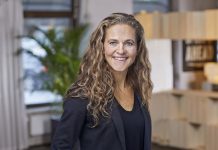





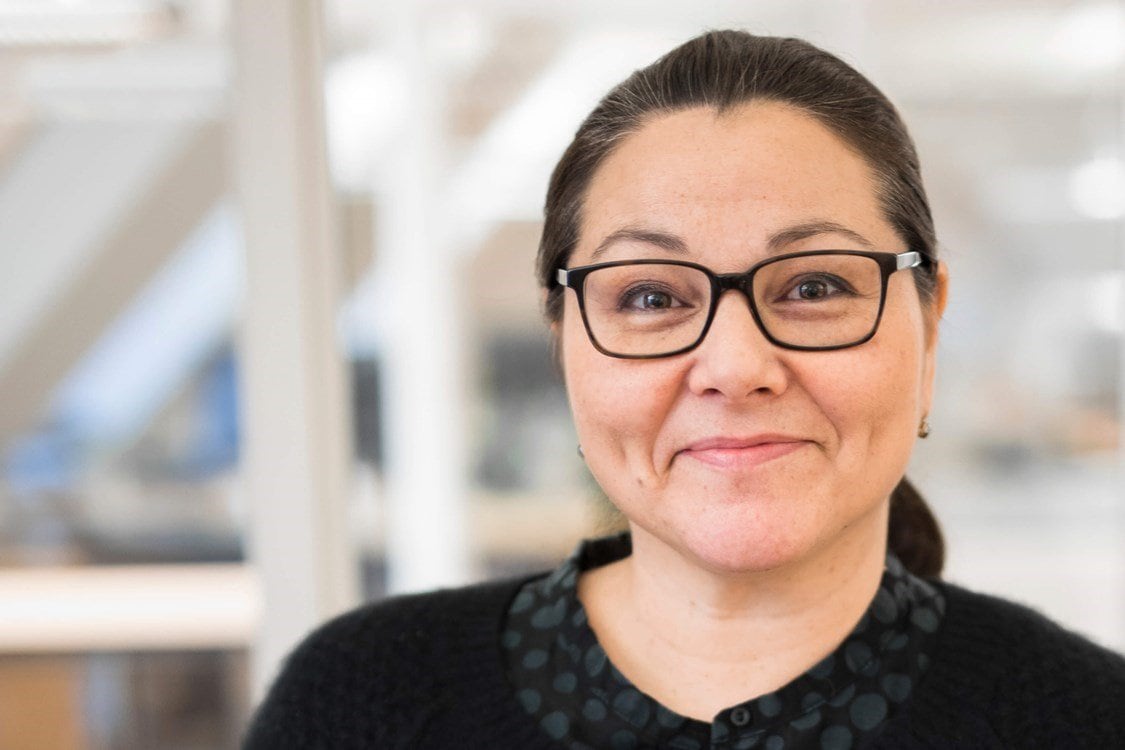
Visit Greenland’s new director, Julia Pars has great visions for lifting the Greenland tourism industry as a diverse yet cohesive entity. Read here what this means for your important role as a local or international stakeholder.
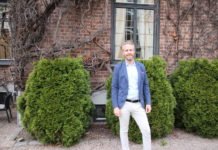
After eight months without permanent leadership, the entire Visit Greenland team was elated to finally welcome Julia Pars as Managing Director on 1 February 2018. While she has already noted the peaceful and relaxed nature of her new stomping grounds down in Colonial Harbour in Nuuk, there are sure to be some bold moves coming from this office on behalf of the entire industry in the coming years.
And that’s exactly how a leader should be: peaceful and open yet mighty when the time is right. Julia has no doubt come in at an exciting time when long-standing ideas are quickly becoming reality. Before we know it, there will be three new/updated airports on the west coast and the Arctic Ocean very well could be open enough for icebreakers to sail around Greenland’s remote north coast.
IN JULIA’S WORDS
We caught up with Julia shortly after she arrived and we proudly share her words with you here.
Visit Greenland: What can we expect from you as an important leader in the tourism industry?
Julia: First and foremost, I will listen. I really want to form a good relationship with all the stakeholders in the industry, so I will listen to everyone with whatever inputs they have.
VG: Where can we meet you in the course of this year?
Julia: I will absolutely be at Vestnorden Travel Mart in Akureyri, Iceland this October, and I will also be at the Tourism Workshop for local operators in Nuuk this November. Before these official events, I am aiming to travel to each of the regions to meet the local operators directly and get a feel for what tourism’s status is in the individual places. Aside from that, I hope I will be able to participate in a few other international trade shows which Visit Greenland typically attends.
VG: What are Greenland’s strengths as a tourism destination? How will you work to ensure they continue?
Julia: In general, we have a fantastic culture and nature which can be experienced in different ways and thus, appeal to many types of travellers. There is also great diversity, both within each region and across regions. Each region has many sides to it, so it can attract many traveller types simultaneously. Each region also has its own unique selling points in comparison to the others. In that way, travellers can easily come back for a repeat trip and have a totally new experience. I would like to see the development of more visitor centres in the regions – like the coming Icefjord Centre in Ilulissat – to tell what the unique elements of each individual region are.
VG: What are Greenland’s weaknesses as a tourism destination? How will you work to improve them?
Julia: Accessibility is a primary one. We need to cooperate to make it easier to get to Greenland, in terms of both price and flight frequency. The development of more airports and longer runways is a sure way to increase this access. Seasonality is another weakness. We need to brainstorm about the unique elements of the winter season and make it more attractive to take a winter holiday in Greenland.
What I would like to do is, all together, brainstorm about what types of tourists we want to focus on. It is clear we want to avoid mass tourism, so we need to decide where the limit lies.
VG: How do you see the various stakeholders’ roles in the tourism industry?
Julia: I think the relationship between Visit Greenland and the Government of Greenland as well as the Department for Industry, Labour, Trade and Energy (under which tourism falls) is important. We need to have a good dialogue with the politicians as it is they who set the framework in which tourism can develop, for example regarding infrastructure projects.
At the same time, I think the regional offices themselves are an important link to brand and sell the region as well as to represent all the local operators in a cohesive way.
The international agents also play an important role in the industry as it is they who have close contact with the tourists out there in the different markets; not to mention, they buy products from the local operators.
VG: ‘Sustainable’ is a buzzword in the tourism industry worldwide. How does it figure in to your work?
Julia: I will focus on ensuring sustainable and responsible travel. Above all, travel must protect the environment, it must support and benefit the local culture, and it must be economically viable, too. It is important to me to think about what type of effect we want tourism to have in Greenland.
VG: For example, several areas in South Greenland have recently received UNESCO World Heritage Site status, and there is potentially coming at least one more site elsewhere the country. How can we take advantage of this in a sustainable way?
Julia: The visibility created by UNESCO World Heritage status is large, so it is important to manage this visibility in a sustainable way so that the sites are protected and preserved. The regional offices have a big task to ensure this protection as well as inform about the sites – not only on the ground through, for example, visitor centres but also in the branding itself.
VG: What do you look forward to most in your new job?
Julia: I am really looking forward to travelling around to all the regions and talking with the individual operators. It is a lifetime goal of mine to do something good for my country, and it is the tourism branch I have chosen as the tool to do it. I look forward to contributing to the development of tourism in Greenland.
VG: How does the future of tourism in Greenland look?
Julia: The future is so bright. There are already so many tendencies that show tourism is going in the right direction. There is growth in the number of travellers coming here, and there is also growth in the number of entrepreneurs within the industry – more than ever before. It is clear that tourism is on the way to being central in Greenland.